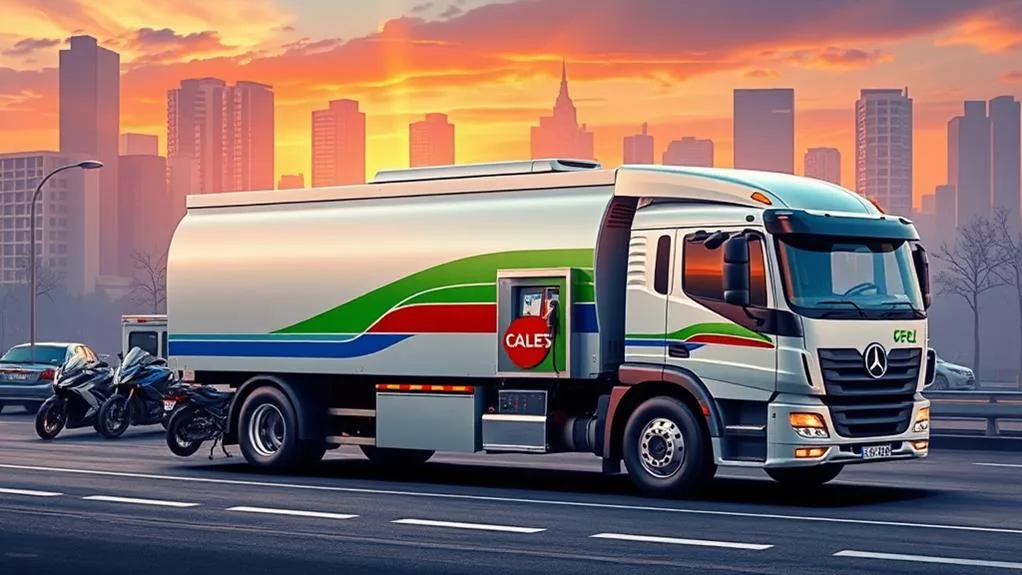
Bespoke fuel delivery systems significantly boost operational efficiency through the use of advanced analytics and optimised route planning, reducing fuel consumption by as much as 15%. Real-time tracking and dynamic pricing models enhance transparency and facilitate cost-effective solutions, preventing overstocking. Businesses enjoy greater convenience with tailored delivery schedules, which minimise downtime and wastage.
Seamless integration with fleet management systems ensures improved supply chain management and boosts fleet performance with predictive maintenance. These strategies not only lower operational costs but also provide a competitive edge.
For additional insights into these compelling benefits, further details are available.
Enhanced Operational Efficiency
In the realm of fuel distribution, enhancing a company's operational efficiency is achievable through bespoke fuel delivery systems. Integrating optimised route planning can lead to a reduction in fuel consumption of up to 15%, positively affecting both financial performance and reducing the environmental impact. Real-time tracking enhances this efficiency, allowing firms to closely monitor deliveries, ensuring prompt and accurate service. This approach reduces delivery times and bolsters customer satisfaction, fostering reliability and trust.
Advanced analytics are pivotal in these customised systems, predicting demand patterns and refining supply chain management. This ability allows businesses to adapt proactively to market demands, ensuring a seamless flow of operations. Personalised fuel delivery services enable organisations to tailor logistics to specific needs, minimising downtime and boosting overall productivity. Such adaptability aligns with businesses aiming to cultivate a sense of belonging within a dynamic market landscape.
Leveraging sophisticated tools and technologies, companies can establish a coherent and responsive operational framework. This framework caters to current demands and anticipates future needs, assuring sustained efficiency and success in fuel distribution.
Cost Reduction Strategies
Enhancing operational efficiency offers significant advantages when companies integrate cost reduction strategies through personalised fuel delivery systems. These systems provide various methods to cut costs, such as optimised route planning and reduced fuel consumption. Leveraging fuel delivery services ensures routes are planned for maximum efficiency, diminishing unnecessary mileage and fuel expenses.
Implementing cost-efficient strategies like dynamic pricing models can lead to substantial savings for both the company and its customers. This method aligns with market fluctuations and guarantees competitive pricing in South African Rand. Real-time monitoring is crucial in minimising costs, preventing overstocking, and reducing storage expenses.
Companies can manage their fuel inventory more precisely, avoiding the financial burden of excess fuel storage.
Personalised fuel delivery solutions harness data analytics for demand forecasting, enabling businesses to streamline operations and eliminate unnecessary expenses. Accurate fuel need predictions allow companies to adjust strategies to meet actual demand, enhancing cost efficiency. Tailored solutions significantly lower operational costs, providing a sustainable financial advantage and fostering a sense of belonging within the industry community.
Improved Convenience for Businesses
For businesses prioritising efficiency, tailored fuel delivery services serve as a crucial solution. These services provide unmatched convenience, eliminating the necessity for manual refueling trips that disrupt daily operations. Scheduling fuel deliveries according to specific requirements ensures a continuous and consistent fuel supply, streamlining operations and allowing companies to concentrate on core activities without the distraction of managing fuel logistics.
Customised delivery options enable businesses to optimise fuel usage, enhancing operational efficiency. Scheduling deliveries based on usage patterns minimises downtime associated with refueling, ensuring smooth and uninterrupted operations. This optimisation leads to more effective management of fuel expenses, as tailored delivery schedules and quantities prevent over-purchasing and wastage, resulting in significant cost savings over time.
For instance, businesses could consider using services like Fuel Logic or Fuel Plus, known for their reliable and efficient delivery systems.
The convenience of customised fuel delivery services fosters a sense of belonging within the business community. Companies operate with increased confidence and efficiency, alleviating the logistical burden of fuel management. This positions businesses to thrive, focusing on growth and innovation.
Real-Time Tracking Advantages
As businesses seek to enhance operational efficiency with tailored fuel delivery services, integrating real-time tracking features marks a major advancement. This technology enables users to monitor the precise location and estimated time of arrival (ETA) of the fuel transporter, enriching transparency and bolstering trust between customers and service providers.
Tracking fuel delivery progress in real-time ensures services are not only prompt but also efficient, addressing key customer concerns about reliability and punctuality.
Real-time tracking reduces uncertainties and potential delays, enhancing the fuel delivery experience, making it seamless and convenient. This feature offers customers a detailed view of the entire delivery process, ensuring they remain informed and confident in the service they receive.
In an industry where time and accuracy are crucial, this technology provides a competitive edge, aligning with the collective goal of streamlined operations.
Ultimately, real-time tracking fosters a sense of belonging among users, as they become actively engaged participants in the delivery process. This transparency not only ensures satisfaction but also strengthens the relationship between businesses and their clientele.
Seamless System Integration
In the domain of personalised fuel distribution, collaboration hinges on smooth system integration with existing fleet management software. This connection enables real-time monitoring of fuel levels, consumption patterns, and vehicle performance, significantly enhancing operational efficiency. Automating data exchange between the fuel delivery system and fleet management software minimises manual errors and streamlines decision-making processes.
This advancement fosters a more cohesive working environment and ensures all team members remain connected and aligned with operational goals.
The advantages of such system integration also include timely maintenance alerts, ensuring vehicles are fuelled and ready for optimal performance. A proactive approach reduces downtime and boosts productivity, cultivating a sense of reliability within the fleet management community.
When systems function in harmony, operational costs decrease, allowing businesses to allocate resources more effectively and nurture a culture of continuous improvement and belonging.
Ultimately, the seamless integration of personalised fuel delivery systems with fleet management software results in a more efficient, cost-effective operation. This provides a solid foundation for growth and innovation, essential in a competitive market.
Optimized Route Planning
Fuel delivery services enhance their effectiveness through optimised route planning. Advanced algorithms in customised fuel delivery apps calculate the most efficient paths for transporters, reducing travel time and boosting operational efficiency. These systems consider various factors, including current traffic conditions, ensuring that fuel reaches customers promptly and reliably.
Optimised route planning is crucial for reducing fuel consumption and lowering operational costs, key advantages for businesses aiming to maximise resource utilisation. Selecting the shortest and least congested routes not only improves customer satisfaction but also fosters loyalty, as clients rely on punctual and dependable service.
Integration of real-time updates allows for dynamic route adjustments, refining the delivery process. This adaptability ensures any unforeseen traffic issues are swiftly navigated, maintaining the seamless experience customers expect.
As a community-driven service, customised fuel delivery benefits from shared knowledge and experiences, building a sense of belonging among users. Essentially, optimised route planning is a cornerstone of modern fuel delivery services, offering a streamlined, efficient, and customer-centric approach that aligns with the needs of today's fast-paced world.
Advanced Fleet Management
Advanced fleet management, augmented with personalised fuel delivery solutions, transforms how businesses manage their transport logistics. Incorporating real-time tracking of fuel consumption and vehicle locations provides a comprehensive overview of fleet operations. Such data empowers fleet managers to optimise routes, enhance fuel efficiency, and schedule refuelling according to each vehicle's specific needs, ensuring smooth and efficient operations.
Personalised solutions extend beyond basic monitoring. Integration of data analytics identifies trends, reduces idle time, and boosts fleet performance. Insights from these analytics enable businesses to refine their operations, leading to notable improvements in productivity and cost savings.
For instance, predictive maintenance alerts and driver behaviour monitoring enhance safety and operational efficiency, establishing a well-managed fleet environment.
The tailored nature of these fuel delivery solutions streamlines fleet management, minimising downtime and reducing operational costs. Businesses adopting these advanced systems find themselves at a competitive edge, reliably meeting customer expectations while fostering team unity in a well-supported and efficient working environment.