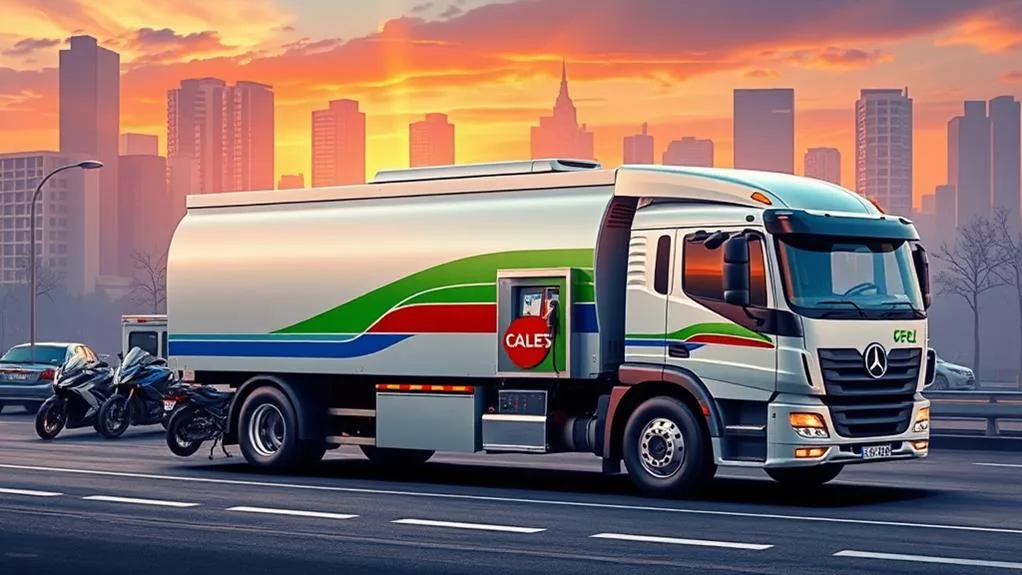
When comparing the costs of mobile fuel delivery and on-site fuelling, several factors must be considered. Mobile fuel delivery often provides tailored options and can lead to savings through reduced vehicle downtime and efficient scheduling. On the other hand, on-site fuelling offers convenience and may enhance camaraderie among fleet operators, potentially reducing logistical expenses. Differences in cost per litre, service charges, and delivery frequency greatly influence overall costs.
Proximity to fuel sources is also crucial. Evaluating pricing structures and operational requirements is vital in deciding the most cost-effective option. Additional insights are available to support your decision-making process.
Understanding Mobile Fuel Delivery
In the realm of contemporary fleet management, mobile fuel delivery services, like those offered by Rhino Fuels, represent a pivotal advancement. This method is transforming fleet operations, delivering fuel directly to vehicles at their location and eradicating the necessity for tedious trips to traditional petrol stations. This innovation enhances operational efficiency, a vital factor for businesses striving to refine their fleet management processes.
Mobile refuelling services yield considerable cost savings, tailoring fuel deliveries to the precise needs and schedules of fleets. This precision not only curtails fuel consumption but enables companies to benefit from bulk fuel purchases, making it a financially prudent option for larger fleets.
For instance, a company with a fleet of delivery vans can significantly cut costs, as bulk purchases in South African Rand can often be negotiated at a reduced rate.
Utilising on-site refuelling, businesses ensure seamless operations with continuous availability, guaranteeing that fleet vehicles remain ready for immediate deployment. An example of this can be seen with logistics firms that operate 24/7, ensuring their lorries are always fuelled and prepared for the next delivery.
Integrating mobile refuelling into fleet management systems demonstrates how innovative solutions can simultaneously drive productivity and savings. As fleets persist in their quest to enhance operational strategies, mobile fuel delivery services affirm their place in a forward-thinking, efficient, and cost-effective community.
On-Site Fueling Overview
On-site fuelling's efficiency revolutionises fleet management, offering a seamless refuelling process directly at a fleet's location. This innovative method ensures fleet vehicles always have convenient access to fuel, eliminating the need for time-consuming trips to traditional petrol stations. Having fuel delivered on-site greatly improves operational efficiency, allowing businesses to concentrate on their core activities.
Mansfield Mobile Fuelling Services is a leader in providing on-site fuelling solutions, specially designed for businesses with large fleets. Their service guarantees that fleet vehicles have immediate access to fuel, reducing downtime and maintaining continuous operations. The convenience of on-site fuelling fosters a sense of community among fleet operators who wish to be part of a collective of forward-thinking enterprises embracing efficiency.
Incorporating on-site fuelling into fleet management strategies enables businesses to optimise operations while creating a more productive work environment. The time-saving nature of on-site fuelling ensures that resources are allocated more effectively, fostering a culture of efficiency and reliability. This service transforms how fleets access fuel, aligning with modern business needs.
Cost Factors to Consider
As businesses adopt on-site fuelling for its operational benefits, understanding the associated cost factors is essential. This comprehension allows companies to manage fuel expenses effectively and foster a financially aware community.
One of the primary considerations is the cost per litre, which can vary widely based on bulk orders. Larger fleets often enjoy reduced rates, making bulk diesel orders a cost-efficient choice, especially when volume discounts are applied.
Service charges play a crucial role in determining the total cost. These charges can fluctuate based on emergency deliveries, specific scheduling needs, and the intrinsic pricing structures of different providers. Delivery frequency can impact overall expenses; more frequent deliveries may lead to increased costs.
Location impact is another important factor; proximity to fuel sources can influence both cost per litre and delivery charges. Businesses situated further from suppliers might face higher expenses. Efficiency gains achieved through streamlined operations can lead to cost savings, optimising the use of fuel and reducing unnecessary consumption.
Evaluating these cost factors allows organisations to strategically manage fuel expenses and ensure fiscal responsibility.
Efficiency and Convenience
Innovative logistics in mobile fuel delivery services provide notable advantages in efficiency and convenience, especially for businesses managing extensive fleets. Offering 24/7 availability, mobile fuel delivery guarantees timely refuelling, removing the need for detours to conventional petrol stations. This approach saves substantial time and enhances operational efficiency for fleet managers. Drivers face reduced unplanned stops, leading to direct cost savings and better oversight of refuelling transactions, which streamlines operations.
On-site refuelling offers its own set of efficiency and convenience benefits. It allows fleets to refuel at their home base, saving time and minimising vehicle wear and tear, thus further boosting operational efficiency. Strategic planning of refuelling schedules can optimise cost efficiency, delivering significant time-saving advantages. For larger fleets, these efficiency improvements often surpass the expenses associated with traditional petrol stations.
Both mobile fuel delivery and on-site refuelling provide compelling solutions for modern fleet operations. As businesses strive for increased efficiency and convenience, the choice between these options will hinge on specific needs and priorities, yet both offer significant enhancements to fleet performance.
Choosing the Best Option
Evaluating the decision-making process between mobile fuel delivery and on-site fuelling involves examining several crucial factors. Cost-effectiveness is paramount and requires an analysis of pricing structures. Businesses should consider transaction sizes and frequency to identify which solution aligns best with their operational needs, potentially resulting in greater cost savings.
Mobile fuel delivery offers significant convenience, particularly for remote locations, contrasting with the inherent efficiency of on-site fuelling systems.
Location significantly affects fuelling costs. Remote areas might find mobile delivery more convenient, whereas centralised operations could benefit from the efficiency of on-site fuelling. It's also important to scrutinise volume discounts and service charges to determine the most cost-effective solution for a fleet.
Larger fleets might enjoy considerable expense reductions through volume discounts, while service charges could favour one option over the other.
The decision ultimately hinges on balancing these factors to achieve optimal cost savings. Conducting a comprehensive analysis will help identify the best fuelling strategy that aligns with operational goals and geographical constraints.