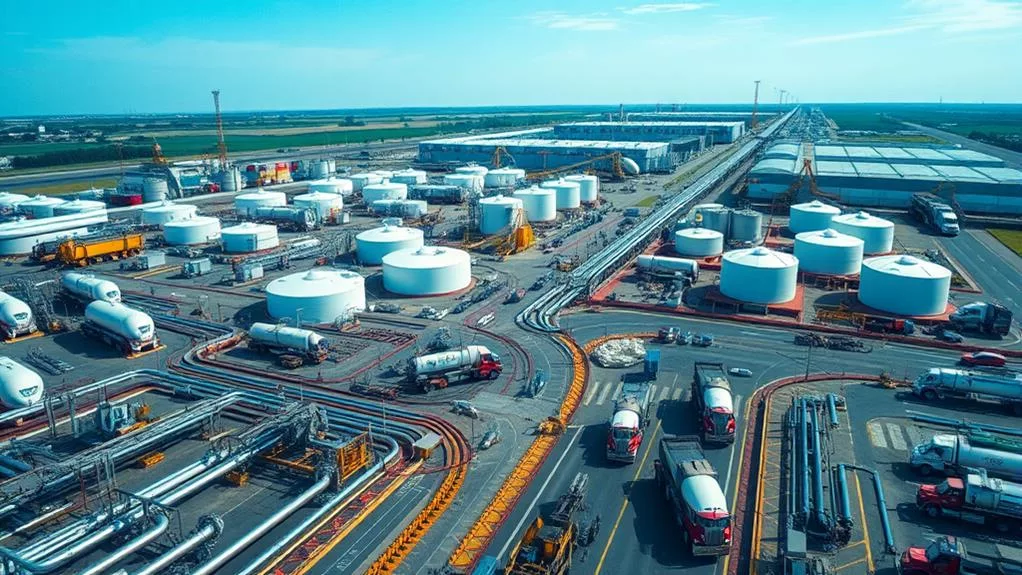
Fuel supply chain management encompasses the strategic procurement of high-quality fuel, engaging with competitive and reliable suppliers whilst ensuring compliance with regulations. It is essential to optimise transportation and distribution through meticulous route planning, real-time monitoring, and stringent safety protocols to ensure timely delivery. Effective storage and inventory management avert deterioration and enhance security.
Technology, such as GPS tracking, telematics, and big data, streamlines operations and provides actionable insights. Security enhancements protect against theft and improve reporting accuracy. This comprehensive framework not only boosts profitability but also aligns with environmental standards. Gain a deeper understanding of how advanced technologies integrate into fuel SCM.
Fuel Procurement Strategies
Fuel acquisition strategies are essential for maintaining the stability and efficiency of the supply network. Establishing long-term agreements with reliable suppliers forms a fundamental part of effective supply chain management, securing competitive rates and ensuring a consistent fuel supply.
Real-time pricing tools are indispensable in a market marked by unpredictability. These tools enable businesses to monitor market fluctuations, facilitating timely and informed decisions that protect against unforeseen price surges, even when prices are quoted in South African Rand.
Quality assurance is equally critical. Balancing regulatory constraints while ensuring compliance is vital for meeting required standards. This balance builds trust and reliability, qualities esteemed in a community focused on excellence and belonging.
Sourcing high-quality fuel from dependable suppliers not only enhances operational efficiency but also reinforces the overall integrity of the supply chain.
Unstable market prices pose inherent risks in fuel acquisition, calling for strategic approaches to mitigate potential impacts. Proactively engaging with trusted suppliers and utilising technology to track market trends allows businesses to confidently navigate uncertainties, ensuring a robust and adaptable fuel supply network that stands firm amid challenges and changes in the market landscape.
Transportation Challenges and Solutions
Transportation stands as a vital element in managing the fuel supply chain, yet it poses several challenges demanding strategic solutions. Ensuring the continuous, safe, and compliant movement of fuel from refineries to storage facilities necessitates meticulous planning and execution. Route optimisation, safety protocols, and regulatory compliance are crucial for maintaining an efficient supply chain.
Route optimisation is essential in tackling transportation challenges. Advanced routing software assists companies in determining the most efficient paths, reducing delays and fuel consumption. This enhances delivery timeliness and contributes to cost savings, measured in South African Rand, alongside environmental sustainability, fostering community responsibility.
Safety protocols are fundamental in the secure transport of fuel. Implementing stringent safety measures ensures that the movement of hazardous materials does not endanger the public or the environment. Adherence to these protocols creates a reliable system trusted by stakeholders, reinforcing their sense of belonging to a safety-conscious industry.
Regulatory compliance is vital in mitigating risks linked to fuel transportation. Strict adherence to legal requirements helps companies avoid penalties and demonstrates a commitment to responsible operations, strengthening their position within the industry.
Efficient Storage Practices
Efficient storage practices are vital in enhancing the resilience of the fuel supply chain. Implementing comprehensive strategies allows suppliers to mitigate risks related to fuel degradation, shortages, and unauthorised access. Real-time inventory management systems ensure optimal fuel levels, reducing the likelihood of shortages or surplus, which can lead to unnecessary costs in South African Rand.
State-of-the-art security measures in storage facilities are essential for safeguarding against fuel theft and unauthorised access. These precautions protect valuable resources and promote security and trust within the supply chain community. Regular quality checks are equally important, verifying that stored fuel maintains its integrity and meets regulatory standards, ensuring that only high-quality fuel moves through the supply chain.
Fuel stabilisers like PRI-D Fuel Stabiliser can significantly prevent degradation, maintaining the long-term quality of stored fuel. Such efficient storage practices contribute to a well-functioning supply chain, optimising inventory levels and minimising losses.
A collaborative environment where these methods are prioritised enables stakeholders to enhance the overall efficiency and reliability of the fuel supply chain, ensuring smoother operations and a stronger sense of unity.
Distribution Techniques
Effective distribution methods are essential in fuel supply chain management, ensuring that fuel reaches end-users efficiently and promptly. GPS tracking and telematics play a vital role, providing real-time monitoring of fuel deliveries. This technology enhances the transparency of the distribution process and fosters trust among stakeholders through accurate updates on delivery status.
Route optimisation is a critical component, achieved through advanced routing software that identifies the optimal paths. Minimising travel time and reducing fuel consumption leads to cost savings and promotes a sustainable supply chain. This aligns with environmentally conscious communities aiming to reduce their carbon footprints.
For instance, using software like Route4Me can streamline operations and support these sustainability efforts.
Quality control remains paramount to ensure the fuel meets the highest standards. Rigorous quality control measures protect product integrity, assuring customers of the service's reliability and excellence. Strong communication channels further boost customer satisfaction through seamless coordination and timely updates, creating a sense of belonging and reliability within the fuel supply chain community.
Importance of Supply Chain Management
In the realm of fuel supply chain management, a well-organised system is crucial. Such systems ensure timely delivery and maintain high fuel quality, which directly affects customer satisfaction. Effective supply chain management (SCM) enhances operations and yields significant financial advantages.
Optimising SCM processes can cut capital costs by 13% and boost sales revenue by 9.8%. A mere 1% reduction in total operating costs can substantially improve profitability, underscoring the need for efficient management systems.
In the petroleum sector, SCM is closely tied to safety and environmental standards. These standards are vital for safeguarding operators and suppliers, ensuring the supply chain remains compliant with regulations. SCM tools and methods are designed to uphold these standards, fostering trust and reliability within the industry.
Strategic SCM in fuel distribution can elevate Economic Value Added by 3.8%, showcasing the tangible benefits. Partnering with organisations such as Diversified Energy Supply can provide valuable insights into tackling complex supply chain challenges and highlight the strength found in shared expertise and a commitment to excellence.
Technology Integration in SCM
Building on the solid framework of effective supply chain management, technology integration transforms fuel supply chain operations. Adoption of tools like GPS tracking, telematics, and real-time monitoring enhances fleet efficiency and operational transparency.
The integration of technology in supply chain management is amplified through fuel management software, providing detailed reports and real-time alerts to optimise fuel consumption and reduce operational costs significantly.
Incorporating technologies such as AI, big data analytics, and the Internet of Things (IoT) leads to a more sophisticated approach to fuel supply chain management. These innovations streamline performance monitoring and enable data-driven decision-making, allowing businesses to fine-tune operations with precision.
Analytics tools within fuel management systems convert raw data into actionable insights, fostering informed decisions that enhance efficiency and cost savings. For companies committed to excellence in fuel supply chain management, embracing technology integration not only improves security but also nurtures a sense of belonging in a rapidly advancing industry landscape.
Specific examples include the use of telematics systems like Fleetmatics for GPS tracking and monitoring, which offer real-time data to manage fleet operations effectively. Fuel management software such as FuelCloud provides tools for tracking fuel use and identifying inefficiencies, streamlining operations and reducing costs in South African Rand.
Enhancing Reliability and Efficiency
To boost reliability and efficiency in fuel supply chain management, companies can harness advanced technology and strategic practices. Implementing a robust fuel management system can reduce capital costs significantly, while also decreasing total operating expenses, thus improving Economic Value Added.
Modern supply chain management trends, such as cloud-based SaaS platforms, enable businesses to remotely manage fleet operations, ensuring optimal fuel flow and improved operations management.
A competent management system integrates proactive maintenance strategies, transitioning from reactive repairs to preventive measures. Sensor data facilitates early detection of potential issues, significantly reducing maintenance expenses and minimizing breakdown risks. This ensures uninterrupted fuel flow, maintaining a reliable supply chain.
Security enhancements through GPS tracking and telematics are crucial. These tools prevent fuel theft and improve cost efficiency, while accurate reporting can lead to reduced tax liabilities. Tailored software solutions address specific business needs, strengthening the integrity of the supply chain.
For instance, using GPS Trackit's Fleet Manager could provide comprehensive tracking and reporting, ensuring that fuel management is both efficient and secure.