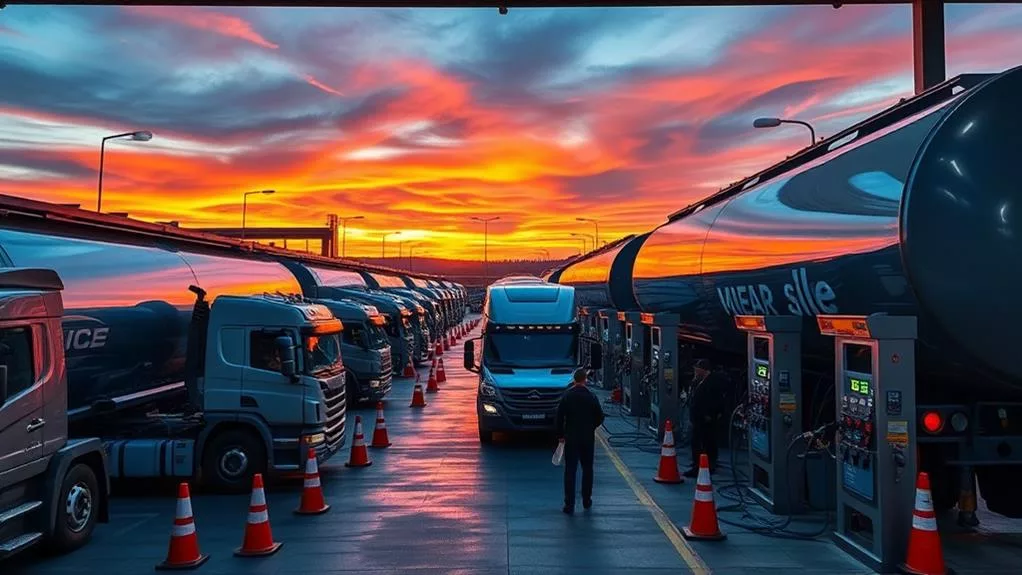
Optimising fuel distribution for large-scale operations requires advanced mathematical models and algorithms that enhance efficiency, reduce costs, and promote sustainability. Key techniques encompass route optimisation, utilisation of Logistics Management Systems and Transportation Management Systems, and bespoke solutions like those offered through BB Energy.
The integration of real-time navigation tools and genetic algorithms further refines distribution paths and schedules. Moreover, optimising existing infrastructure, such as pipelines, is essential to satisfy future energy demands.
Challenges include balancing supply and demand while complying with regulations. As you gain a comprehensive understanding of these innovative approaches, you will develop a thorough grasp of fuel logistics optimisation.
Importance of Route Optimization
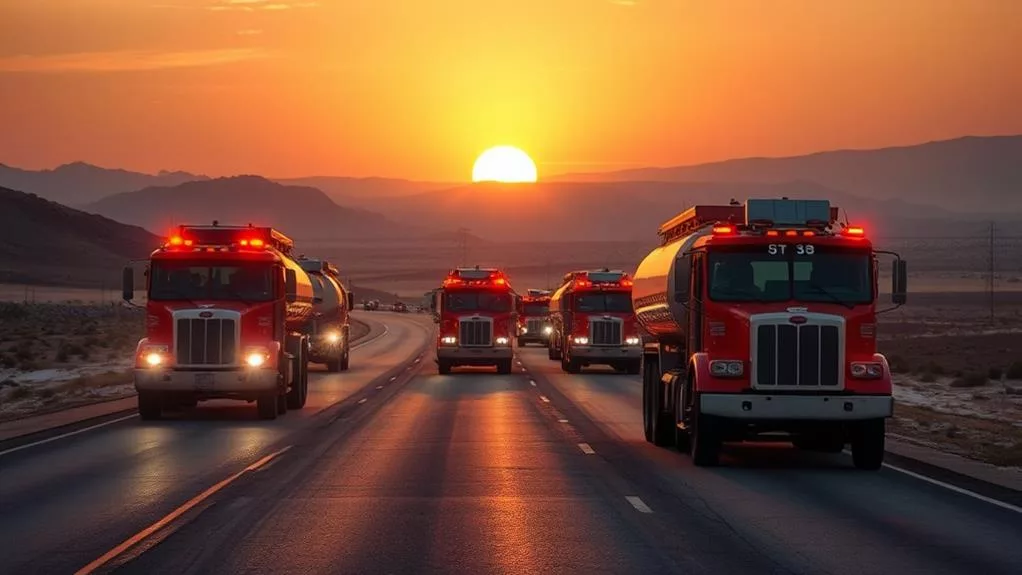
Optimising routes in fuel distribution ensures the timely and efficient delivery of petroleum products to meet market demands. In large-scale operations, where logistical challenges are prevalent, route optimisation is essential for enhancing operational efficiency.
Meticulously planned fuel distribution paths allow companies to significantly reduce transportation costs and improve logistics performance, a crucial factor for maintaining market competitiveness.
A well-optimised route not only addresses economic considerations but also aligns with the increasing need for sustainability. Minimising unnecessary fuel consumption leads to substantial savings and directly contributes to a decreased environmental impact. This is especially important in today's climate-conscious society, where businesses are accountable for their ecological footprint.
Optimised routes naturally increase safety measures, reducing risks associated with the transportation and delivery of fuel products. This proactive approach to risk management ensures that fuel reaches its destination efficiently and safely, building trust and reliability within the community it serves.
The strategic implementation of route optimisation in fuel distribution not only meets current operational needs but also aligns with a broader commitment to sustainable and responsible business practices.
Tools for Efficient Distribution
Efficient fuel distribution in large-scale operations relies on advanced tools and technologies. Logistics Management Systems (LMS) and Transportation Management Systems (TMS) are foundational in optimising fuel distribution. These systems streamline logistics management, ensuring the entire fuel distribution network operates with precision and efficiency. Everyone works as a cohesive unit towards optimisation and excellence.
Genetic algorithms, a sophisticated tool for route optimisation, improve fuel logistics by enhancing distribution paths. These algorithms simulate natural selection, finding the most efficient routes.
Linear programming techniques are indispensable, enabling transportation management teams to determine optimal distribution routes. They offer a mathematical approach to solving complex logistics problems, fostering a sense of achievement in overcoming distribution challenges.
Road maps and navigation applications play a vital role in real-time decision-making. These tools offer dynamic solutions, allowing adjustments in complex networks and ensuring fuel reaches its destination swiftly and safely. Utilising these advanced tools enables teams to achieve a smooth fuel distribution process that not only meets but exceeds operational expectations.
Customised Solutions by BB Energy
Building on the advanced tools and technologies essential for efficient fuel distribution, BB Energy provides bespoke solutions crafted to meet each client's specific demands. Leveraging cutting-edge optimisation techniques, the company ensures large-scale operations receive timely and efficient fuel delivery.
A key element of BB Energy's customised approach is meticulous route planning, enabling precise scheduling and enhanced inventory management. This ensures fuel reaches its destination in the most efficient manner, minimising delays and maximising effectiveness.
Incorporating advanced technology and data analytics, BB Energy streamlines fuel distribution processes, boosting logistics efficiency. Their dedication to cost-effective strategies is evident in their efforts to reduce fuel consumption, benefiting clients economically while supporting sustainability initiatives.
Tailored solutions align with each client's unique logistical requirements, fostering a sense of belonging among partners who rely on the company's expertise and innovative methods.
BB Energy offers comprehensive software for route optimisation, such as RouteMaster, which aids in reducing travel time and fuel usage. For clients requiring storage solutions, BB Energy recommends the use of high-capacity tanks, designed to maintain fuel quality and reduce evaporation losses. Through these specific solutions, BB Energy continues to demonstrate its commitment to both operational efficiency and environmental responsibility.
Pipeline Infrastructure Insights
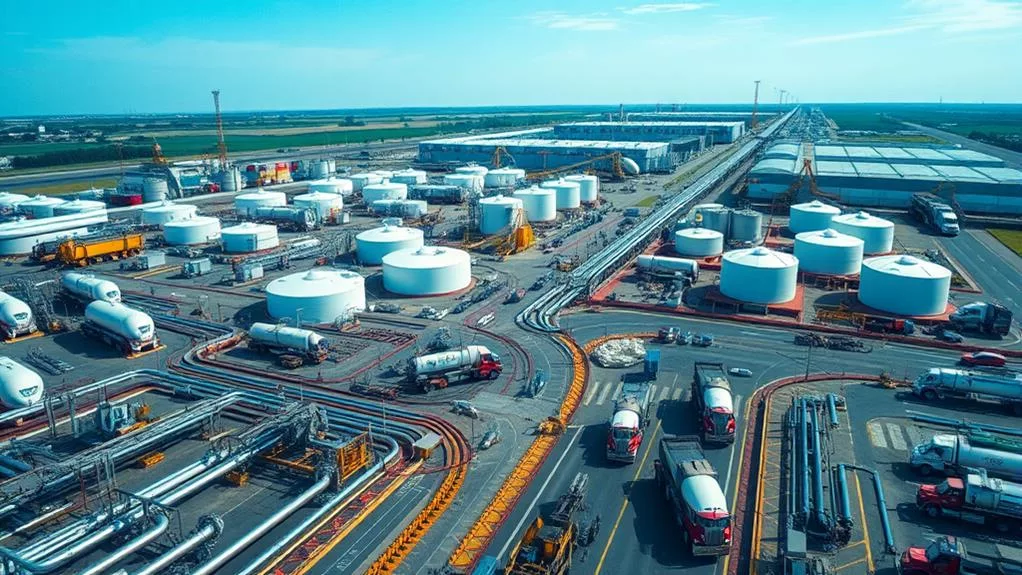
The extensive pipeline infrastructure across the United States is an essential element of the country's energy distribution network. This intricate system, spanning over 215,736 miles as of 2018, has expanded significantly from the 192,396 miles recorded in 2013. Pipelines are crucial for efficiently transporting crude oil and refined products, meeting the rising energy demand while managing operational costs.
In 2017, pipelines accounted for over 18% of freight transport in the U.S., underscoring their vital role in transportation operations.
Natural gas pipelines significantly reduce carbon emissions, providing a more efficient energy use method than alternative transportation options. With U.S. oil production set to increase, optimising pipeline infrastructure is increasingly important.
Optimisation efforts focus on enhancing safety, reducing energy consumption, and minimising operational costs. For instance, poly-duct systems transported 6.642 billion barrels of products across 65,352 miles in 2013 alone, showcasing pipelines' capacity for large-scale operations.
The industry's ongoing commitment to optimising pipelines is crucial for sustainably meeting future energy demands.
Challenges in Fuel Logistics
Managing the intricacies of fuel logistics necessitates a strategic approach, as balancing supply and demand is crucial to avoid both shortages and surplus. In extensive fuel operations, efficient route planning is essential to surmount obstacles like traffic congestion and road closures. This ensures timely delivery and reduces delays, fostering reliability and trust within the community of stakeholders.
The integration of multiple transportation modes adds a layer of complexity, requiring smooth transitions among road, rail, and sea to sustain a consistent flow of fuel. This complexity is further heightened by fluctuating market demands, which necessitate agile logistical strategies to swiftly adjust to changing conditions.
Compliance with regulatory requirements and adherence to safety standards remain imperative in fuel logistics. These factors introduce additional complexity, as operators must continuously monitor and align with evolving regulations, ensuring the safety of personnel and the environment.
Future Trends in Distribution
How will the landscape of fuel distribution change in the coming decades? As global reliance on natural gas rises, projected to increase significantly by 2035, the focus on optimising transmission pipelines becomes crucial. These pipelines, which currently transport 93% of the world's natural gas, are the backbone of the distribution network. The future promises enhanced efficiency in these systems, ensuring they meet growing energy demands while maintaining operational profitability and sustainability.
Strategies will prioritise reducing supply shortages, increasing gas throughput, and maximising net profit. These advancements aim to strengthen the economic viability of fuel distribution and address the urgent need for sustainable energy solutions. Given the limited reserves of natural gas, streamlining distribution methods is essential to accommodate future demands effectively.
The integration of advanced technologies and data-driven approaches will drive these changes, fostering a sense of community among industry stakeholders committed to sustainable growth. Embracing these future trends, the fuel distribution sector will secure its operational profitability and contribute to the broader objective of a sustainable energy future. These efforts will solidify a united, forward-thinking community dedicated to innovation and resilience.
Enhancing Operational Efficiency
Operational efficiency in fuel distribution is crucial for maintaining a competitive edge and meeting the increasing global energy demands. Utilising multi-objective optimisation techniques allows companies to significantly reduce fuel costs and energy consumption while ensuring optimal operation. Efficient use of transportation routes and schedules offers a strategic approach to lowering operational expenses.
Advanced mathematical models and algorithms are essential for navigating the complexities of large-scale operations. These tools enable precise management of distribution paths and schedules, particularly through pipeline systems, improving both delivery timeliness and inventory management. The integration of route optimisation tools minimises fuel consumption and contributes to a notable decrease in carbon emissions, aligning with global sustainability goals.
Efficient compressor station and network optimisation strategies are crucial in reducing energy consumption across the distribution network. Harnessing these cutting-edge techniques allows companies to operate more cost-effectively and sustainably.
In an industry where efficiency translates to both economic and ecological benefits, embracing these advancements fosters a sense of belonging among stakeholders committed to innovation and environmental stewardship. Achieving superior operational efficiency is not merely an option but a necessity for future-ready fuel distribution enterprises.