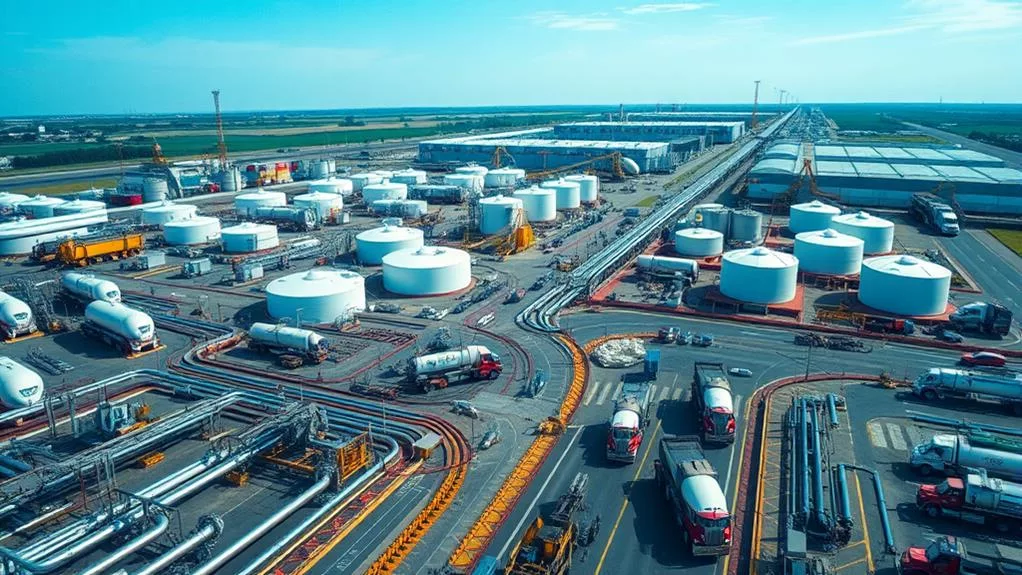
In a comparative analysis of diesel versus petrol for bulk supply, diesel emerges as the superior choice. Cost advantages arise from economies of scale, leading to reduced per-litre expenses and the capacity for stable price agreements. Diesel offers higher energy density and efficiency, resulting in better performance and fuel economy. Environmental benefits include reduced emissions and improved sustainability through low-sulphur variations. Bulk diesel also guarantees consistent fuel quality when proper storage protocols are adhered to.
Industries such as transportation and construction prefer diesel for its torque and reliability. Diesel's attributes make it a more attractive option for sectors that demand high efficiency and consistent performance.
The advantages provided by diesel in terms of cost, efficiency, and environmental impact make it the preferred choice for large-scale operations.
Cost Considerations
When considering the cost factors of diesel versus petrol in large-scale supply, it is crucial to recognise that diesel prices are generally higher, influenced by elements such as taxes, refining costs, and global market dynamics. Despite this, the bulk fuel supply of diesel can offer a beneficial opportunity for businesses with significant fuel requirements. The economies of scale inherent in bulk buying can lead to substantial cost savings, providing a more predictable and stable pricing structure compared to regular petrol acquisition.
Higher taxes on diesel might initially seem unfavourable. Nonetheless, considering the per-gallon cost reductions achievable through bulk purchases, diesel becomes a competitive choice. Businesses relying on extensive fuel supply, such as transportation and logistics companies, can benefit from these savings to enhance operational efficiency and financial planning.
Securing bulk fuel agreements allows for negotiating terms that mitigate the impact of fluctuating fuel prices globally.
Understanding these cost factors enables organisations to make informed decisions about their fuel procurement strategies. This knowledge ensures businesses remain competitive and integrated within their industry, fostering a sense of belonging as they manage the complexities of fuel supply.
Efficiency and Performance
Efficiency and performance are vital factors when comparing bulk diesel and petrol supply for commercial operations. Diesel fuel is notable for its superior efficiency and performance, largely due to its higher energy density. Diesel engines extract more power from the same volume of fuel compared to petrol engines, making them ideal for commercial applications that demand durable, reliable, and sustained power output.
In commercial settings, diesel engines excel with higher thermal efficiency and torque, crucial for heavy-duty tasks. This results in better fuel economy, which is important for businesses managing fleets or machinery, as it directly affects operational costs. Diesel engines perform effectively under challenging conditions, proving to be assets for enterprises seeking high productivity and reliability.
Petrol engines are suitable for smaller vehicles and applications where peak performance is not crucial but are less efficient in commercial contexts. Their lower energy density leads to higher fuel consumption and reduced power output, making them less attractive for large-scale operations. For commercial users prioritising efficiency, performance, and energy economy, diesel remains the optimal choice.
Specific examples include the Mercedes-Benz Sprinter and Ford Transit, both known for their diesel engine options offering excellent fuel efficiency and reliable power output.
For those needing machinery, the Caterpillar 3516 diesel generator is a top recommendation for its robust performance in demanding environments.
Environmental Impacts
In terms of environmental impacts, bulk diesel supply provides several advantages over petrol, mainly due to its capacity to reduce emissions and traffic congestion. Fewer delivery trips are required, meaning urban congestion is significantly diminished, which is typically exacerbated by petrol deliveries at retail stations. This efficiency not only decreases traffic but also cuts down pollution, as fewer vehicles contribute to harmful emissions.
Diesel bulk delivery lorries are engineered for efficiency, thereby reducing the carbon footprint per litre of fuel transported. This aspect is vital for communities focused on sustainability, supporting collective efforts to enhance environmental quality. The utilisation of low-sulphur diesel or biofuels enhances these sustainability benefits, demonstrating a commitment to cleaner energy alternatives that align with global environmental objectives.
Environmental impact assessments consistently show bulk diesel as superior to petrol, highlighting its effectiveness in emissions control, pollution reduction, and sustainability measures. These findings resonate with those who aim to be part of a society that values ecological responsibility and proactive measures towards a healthier planet. Consequently, bulk diesel supply underscores a strategic move towards a more sustainable future, benefiting both the environment and communities alike.
Fuel Quality and Storage
Ensuring the quality of fuel and maintaining proper storage conditions is crucial for bulk fuel suppliers. They must comply with strict standards to meet customer specifications, guaranteeing that the fuel provided meets expected performance criteria. Fuel quality integrity is maintained through careful management of storage conditions, including regular inspections and maintenance of storage tanks. These tanks, significantly larger than those at retail stations, provide ample reserves, allowing businesses to continue operations without disruption.
Regular maintenance and inspections prevent contamination, safeguarding the effectiveness of both diesel and petrol. These practices enable the early identification of potential issues, ensuring storage tanks remain secure and fuel uncontaminated. This proactive approach cultivates trust and reliability among businesses dependent on bulk fuel delivery.
Retail fuel stations prioritise fuel quality, implementing regular tank and filter maintenance to meet consumer expectations. However, the scale and frequency of maintenance required for bulk storage systems necessitate more stringent standards due to their larger capacities. Bulk suppliers play a vital role in maintaining an uninterrupted supply chain, essential for industries that rely on high-quality fuel.
For example, businesses can consider using additive products like Stanadyne Diesel Fuel Additive for enhanced fuel performance. Regular use of such products can help in maintaining engine efficiency and reducing emissions.
Industry-Specific Suitability
For industries reliant on specific vehicle types, the choice between diesel and petrol in bulk supply is critical for operational efficiency and cost-effectiveness. The suitability of each fuel type within an industry significantly influences which option aligns best with a business's operational demands and economic goals.
Diesel bulk supply offers distinct advantages for sectors such as transportation, construction, and agriculture, where heavy-duty vehicles are common. These industries benefit from diesel's superior fuel efficiency, torque, and cost savings, providing lower operational costs per mile and higher energy content.
Industries using smaller vehicles, such as landscaping, delivery services, and small construction projects, find petrol's higher octane rating more suitable. In these sectors, petrol offers a balance of performance and efficiency, meeting the specific engine requirements and operational profiles of smaller vehicles.
Businesses with mixed fleets face a more complex choice in selecting the appropriate bulk supply. Considerations of fuel economy, engine compatibility, and industry-specific suitability of diesel and petrol must be assessed. Understanding the suitability of diesel and petrol is essential for optimising fleet performance and ensuring economic viability in today's competitive landscape.
For example, the Ford Transit, popular in delivery services, performs efficiently with petrol, while a John Deere tractor in agriculture thrives on diesel. Each vehicle type has its own fuel preference based on its operational needs. The choice directly impacts the overall performance and cost management of the business.