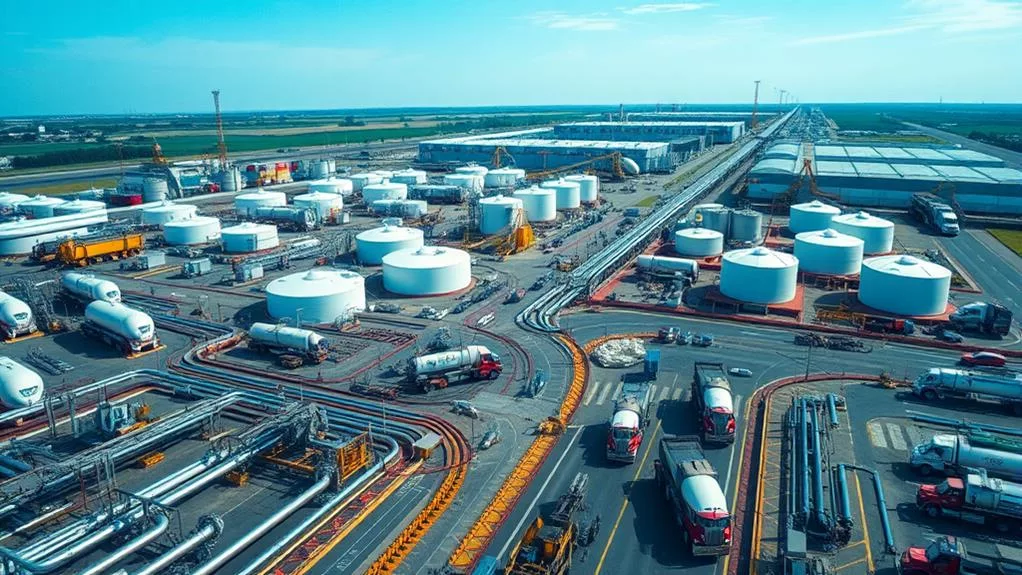
Fuel management systems are essential for optimising bulk fuel supply, ensuring efficient operations and significant cost savings. These systems provide real-time consumption insights, automated data collection, and predictive analytics, thereby preventing overstocking or shortages. With hardware components meeting safety standards, systems include real-time monitoring and detailed reporting tools for seamless management. They reduce operational costs up to 15%, saving businesses considerable expenses annually.
Advanced solutions such as FuelCloud and SmartFill Gen 2 offer mobile integration and central control, strengthening the strategic operations of sectors like mining and railways. As businesses continue to investigate further, they will uncover more strategic benefits.
Understanding Fuel Management Systems
In the realm of contemporary industrial operations, understanding fuel management systems is essential for optimising resource efficiency. These advanced systems, which combine hardware and software, are critical in maintaining a steady fuel supply across sectors such as mining and railways. They provide precise fuel management solutions, facilitating efficient monitoring and control within storage facilities.
Automated tank systems are integral to fleet management, ensuring every drop of fuel is accounted for, with reconciliation rates exceeding 99.5%.
Fuel management systems utilise Auto ID inputs to enhance operations through accurate identification and control of pumps and valves, thus boosting operational efficiency. These systems are capable of managing multiple fuel types from a single controller, offering a comprehensive solution to complex fuel requirements.
Hardware components, including robust couplings and controllers, are engineered to meet safety regulations, ensuring secure access and protection from unauthorised usage.
For instance, the Veeder-Root TLS-450PLUS is a notable product that ensures precise fuel monitoring, allowing for reliable inventory management. Additionally, the Piusi Cube 70 MC offers an effective solution for smaller operations requiring a compact yet efficient fuel management system. These systems not only enhance operational efficiency but also contribute to significant cost savings, priced in South African Rand, without compromising safety standards.
Enhancing Bulk Fuel Efficiency
Improving bulk fuel efficiency is crucial for industries aiming to optimise operational performance. Advanced monitoring systems provide real-time insights into consumption rates, which are essential for identifying usage patterns and forecasting future demand. This predictive capability allows for data-driven decisions, ensuring that supply aligns perfectly with operational requirements.
Efficient monitoring systems optimise supply chain operations and remove risks associated with overstocking or shortages. Maintaining optimal inventory levels ensures an uninterrupted fuel supply that meets immediate and long-term needs. Implementing such systems often results in significant cost savings, as they enable improved purchasing trends and minimise wastage.
Fuel management systems are a strategic investment for industries aiming to boost bulk fuel efficiency. They foster a collaborative approach among stakeholders in managing resources. This strengthens the entire operational framework, ensuring streamlined and efficient fuel management, ultimately driving operational success.
For example, the FuelCloud system offers a comprehensive solution with real-time monitoring and automatic reporting. It enables businesses to track fuel levels accurately and adjust orders accordingly, helping prevent excess inventory and reduce costs.
Another option is the SmartFill Gen 2 system, which provides precise data on fuel usage and aids in optimising fuel delivery schedules.
Incorporating such systems not only enhances efficiency but also instils a sense of shared responsibility among team members, promoting a unified approach to resource management. As a result, industries can expect improved operational performance and reduced wastage, contributing to overall success.
Reducing Operational Costs
Advanced fuel management systems contribute to substantial reductions in operational costs, potentially saving up to 15% through efficient fuel usage monitoring and control. Optimising fuel consumption allows businesses to enhance operational efficiency, achieving savings of up to ZAR 27,000 per vehicle annually. This strengthens financial performance and fosters a community spirit among businesses committed to sustainability and economic prudence.
These systems play a crucial role in Bulk Fuel Management, offering comprehensive insights into fuel consumption patterns. Accurate data from storage tanks and monitoring tools enable companies to collaborate effectively with fuel suppliers, ensuring optimal inventory levels and reducing unnecessary spending. Identifying and mitigating fuel theft, which accounts for 1-3% of total fuel costs, further protects the financial health of the business.
Detailed fuel usage reports allow companies to identify inefficiencies and implement corrective measures, potentially saving up to 10% on total fuel expenses. This informed approach enhances operational efficiency and demonstrates a commitment to responsible resource utilisation. Stakeholders who value economic and environmental stewardship appreciate such efforts.
For example, the FuelMaster system provides robust solutions for managing and controlling fuel consumption. Another option is the SmartFuel system, which offers real-time tracking and reporting, enabling businesses to maintain transparency and accountability in their fuel usage.
Implementing Technological Solutions
Technological advancements have revolutionised the field of fuel management, enabling businesses to harness sophisticated systems for enhanced operational control. These fuel management systems integrate advanced hardware and software to meticulously manage fuel delivery and consumption, achieving reconciliation rates exceeding 99.5%. This level of precision instils confidence among stakeholders, ensuring smooth operations without unnecessary interruptions.
Implementing these systems centralises the control of pumps, valves, and various fuel types from a single controller, promoting efficient and secure management. Real-time monitoring and accurate measurement provide instant data, while secure access protects operations from unauthorised interference.
Automatic tank monitoring optimises delivery schedules, minimising downtime and maximising productivity.
Mobile fuelling technologies integrated into these systems ensure a continuous fuel supply, preserving valuable productive hours. The seamless data capture and analysis offered by these systems lead to significant cost savings and improved operational efficiency. Businesses striving for excellence find adopting these advanced technological solutions crucial for fostering a community of efficient, forward-thinking enterprises.
Benefits for South African Businesses
In South Africa's competitive business landscape, fuel management systems offer a strategic edge through optimising bulk fuel supply with real-time monitoring and control capabilities. These innovative solutions ensure a reliable fuel supply chain that local businesses can trust. With the capacity to track usage patterns and predict demand, companies can make data-driven decisions to enhance operational efficiency and fuel economy.
Effective fuel management through detailed reporting tools provides businesses with valuable insights into consumption and optimisation, promoting informed decision-making. This approach not only reduces operational costs but also refines purchasing trends to align with actual usage. Scheduled deliveries, facilitated by these systems, help maintain optimal inventory levels, ensuring uninterrupted operations.
Investing in high-quality storage tanks with advanced monitoring systems allows South African businesses to avert fuel-related issues such as contamination, evaporation, and theft. A product like the Gilbarco Veeder-Root TLS4i tank gauge system can be particularly effective. This proactive strategy ensures compliance with stringent environmental regulations, enhancing the company's reputation and sustainability credentials.
Ultimately, fuel management systems furnish South African businesses with a competitive advantage, enabling them to confidently and reliably navigate the complexities of the fuel supply chain.