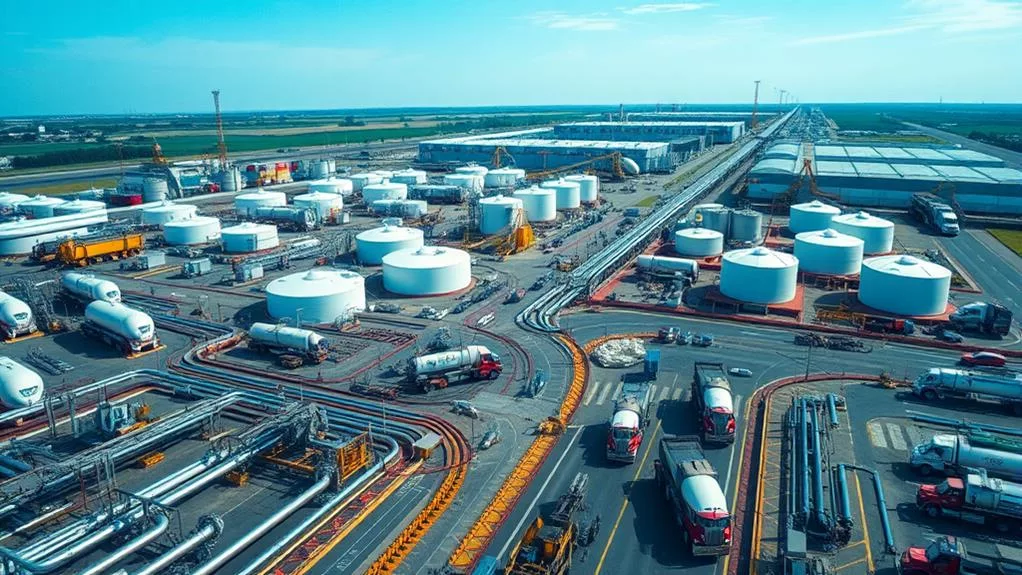
Fuel monitoring systems are crucial for ensuring efficient and secure on-site deliveries. They offer real-time data tracking, allowing businesses to optimise operations through monitoring fuel usage, deterring theft, and maintaining precise control over distribution processes.
Advanced tracking solutions with GPS integration enhance route planning and delivery efficiency while minimising fuel wastage. Systems equipped with priority alarms promptly address abnormalities, reducing risks.
These technologies also promote transparency, enable data-driven decisions, and increase accountability by providing insights into consumption patterns. A thorough understanding of how these systems enhance fuel management can significantly improve operational performance.
Importance of Fuel Monitoring
Why is fuel monitoring crucial in on-site deliveries? In the complex realm of fuel distribution, ensuring secure and efficient operations is essential. Fuel Monitoring plays a significant role with robust tracking systems that deter theft and ensure accurate fuel deliveries. Real-Time Monitoring technologies, like ProGauge magnetostrictive probes, allow companies to observe loading and unloading activities closely. This enhances the management of fuel transportation and streamlines operations, fostering trust and reliability among stakeholders.
Sophisticated tracking systems enable precise control of fuel distribution processes. Real-Time Monitoring systems come with priority alarms that quickly alert operators to any abnormalities, ensuring swift resolution of potential issues.
Monitoring driver profiles, assessing driving patterns, and implementing vehicle constraints greatly improve transportation efficiency. These measures maintain control over fuel assets and protect against unauthorised access or misuse.
Real-Time Data Tracking
Real-time data tracking is crucial in modern fuel monitoring systems, offering immediate insights into fuel consumption, purchases, and maintenance activities. This capability enables businesses to swiftly address inefficiencies, promoting a sustainable and cost-effective approach to fuel management.
Utilising real-time monitoring, delivery companies can closely observe driver behaviour, identifying patterns such as excessive idling that can inflate fuel costs and damage the environment. Proactive data tracking not only enhances fuel efficiency but also supports environmental responsibility, encouraging a shared sense of purpose among eco-conscious stakeholders.
The integration of preventive maintenance scheduling within fuel monitoring systems optimises operations. Automated alerts for potential engine issues or improper tyre inflation ensure maintenance tasks are completed before they escalate, improving fuel efficiency. Delivery companies benefit from reduced downtime and vehicles consistently performing at their best.
Embracing real-time data tracking allows businesses to build robust and reliable delivery networks. This technology empowers companies to create coherent and efficient operations, where each member plays a crucial role in achieving shared goals. Real-time data tracking serves as a foundation for modernised, efficient fuel management strategies.
To illustrate, the use of systems like the Fuelio app can help track fuel expenses and consumption effectively. Fuelio provides detailed reports and helps identify trends in fuel usage, which can assist businesses in making informed decisions. Moreover, with the ability to support multiple vehicles, it is an excellent tool for fleet management, ensuring that every vehicle is accounted for and operating efficiently.
Enhancing Delivery Efficiency
Effective delivery systems enhance on-site fuel delivery operations. Integrating GPS tracking with real-time monitoring allows companies to achieve superior delivery performance. GPS technology optimises precise route planning, reducing travel time and fuel consumption. Deliveries are executed promptly, meeting clients' expectations for dependability and precision.
The adoption of the E-ticket format boosts effectiveness, providing a secure method to document delivery details. This system prevents fraud and discrepancies, ensuring accurate recording with specific timestamps. Such transparency nurtures trust, strengthening relationships with clients who value honest and secure transactions.
Mobile data connectivity offers continuous tracking capabilities, even in areas with limited cellular signal. This feature captures and timestamps GPS coordinates when offline, preserving data integrity until the device reconnects to the network. Secure web-based dashboards at headquarters offer real-time monitoring of stock movements, empowering teams to maintain control over the entire delivery process.
Embracing advanced tracking systems significantly improves delivery performance, reinforcing a commitment to excellence and reliability in the fuel delivery industry.
For those seeking specific products, the Garmin GPS Fleet Tracking System is recommended for its accuracy and reliability. Additionally, the Teltonika FMB920 is an excellent choice for mobile connectivity, ensuring data capture even in remote areas.
Preventing Fuel Losses
Fuel theft is a significant concern in the fuel delivery sector, necessitating robust monitoring systems. In 2020, Swedish road carriers experienced a loss of 150,225 litres of fuel due to theft, highlighting the pressing need for effective preventative measures. Fuel Management Systems are crucial for protecting fuel assets, facilitating precise tracking and reducing unauthorised use during on-site deliveries.
Real-time monitoring systems lead these initiatives, consistently overseeing fuel levels and alerting operators to any irregularities. Priority alarms within these systems flag abnormal fuel usage immediately, mitigating the risk of losses during transport. This method not only deters potential theft but also promotes security and accountability among operators, supporting the industry's goal of resource preservation and operational integrity.
Incorporating advanced technologies such as ProGauge magnetostrictive probes ensures accurate measurement, leading to precise fuel deliveries and minimising loss during transit. Investing in comprehensive monitoring solutions enhances a secure and efficient fuel delivery environment.
Advanced Tracking Solutions
Building on robust fuel monitoring systems to prevent losses, advanced tracking solutions offer a new dimension to on-site fuel deliveries. These sophisticated fuel management systems utilise real-time GPS tracking to optimise both stock monitoring and vehicle tracking. Providing accurate, continuous oversight ensures every drop of fuel is accounted for, fostering reliability and trust among stakeholders.
In today's fast-paced world, accessing integrated reports detailing delivery activities—such as product type, quantity, and timestamps—empowers companies to make informed decisions swiftly. Geo-fences offer precise monitoring of truck entry and exit points in designated areas during on-site deliveries. This streamlines operations and reinforces accountability.
Mobile data ensures uninterrupted tracking, even in regions with poor cellular signal. This seamless connectivity is complemented by secure web-based dashboards at headquarters, offering a centralised view of stock movements. Dashboards enable companies to efficiently oversee and manage their on-site deliveries, fostering unity and shared purpose within the organisation. Together, these advanced tracking solutions redefine how businesses approach fuel logistics.
Specific products like the FuelGuard GPS Tracker and FuelLogic Dashboard are recommended for businesses looking to upgrade their tracking capabilities. These tools offer enhanced features tailored for comprehensive fuel management and improved operational efficiency.
Improving Security Measures
To strengthen security in fuel logistics, implementing advanced fuel monitoring systems is crucial in safeguarding against theft and mishandling during transportation. On-site deliveries are an integral part of fuel distribution, making secure fuel transit essential. Technologies such as ProGauge magnetostrictive probe technology enhance security measures by providing precise tracking of loading and unloading activities.
Fuel monitoring systems incorporate sophisticated tracking systems for real-time monitoring of fuel deliveries. These systems not only streamline operations but also include priority alarms to alert relevant personnel to any abnormalities during transit. This timely intervention reduces risks and ensures fuel is delivered securely and efficiently.
Retailers gain from these improved security measures, optimising transport operations and minimising potential risks related to fuel theft and mishandling. By fostering a sense of security and reliability, these advanced technologies build trust among stakeholders in fuel logistics.
As fuel monitoring systems advance, they play a crucial role in ensuring safety and efficiency in on-site deliveries, ultimately strengthening the entire fuel supply chain.
Optimizing Cost Control
Implementing fuel monitoring systems for on-site deliveries brings notable advantages in optimising cost control. Real-time tracking of fuel consumption enables businesses to pinpoint and address inefficient usage patterns, leading to reduced operational costs. For organisations focused on resource management and financial responsibility, integrating such a system is a strategic step towards sustainable cost control.
Real-time tracking ensures accurate billing, guarding against unauthorised fuel consumption. This transparency strengthens accountability and builds trust within the operational framework. Businesses gain detailed insights into fuel usage trends, essential for informed decision-making. Data-driven strategies allow companies to refine practices, aligning resource utilisation with broader organisational objectives.
Monitoring fuel consumption during on-site deliveries enhances expense management, boosting overall cost efficiency. Vigilant monitoring of fuel usage enables companies to make adjustments that directly impact financial health and operational excellence.
In a competitive landscape where every Rand counts, adopting a fuel monitoring system signifies a commitment to efficiency and community, ensuring businesses thrive while promoting sustainability and responsibility.