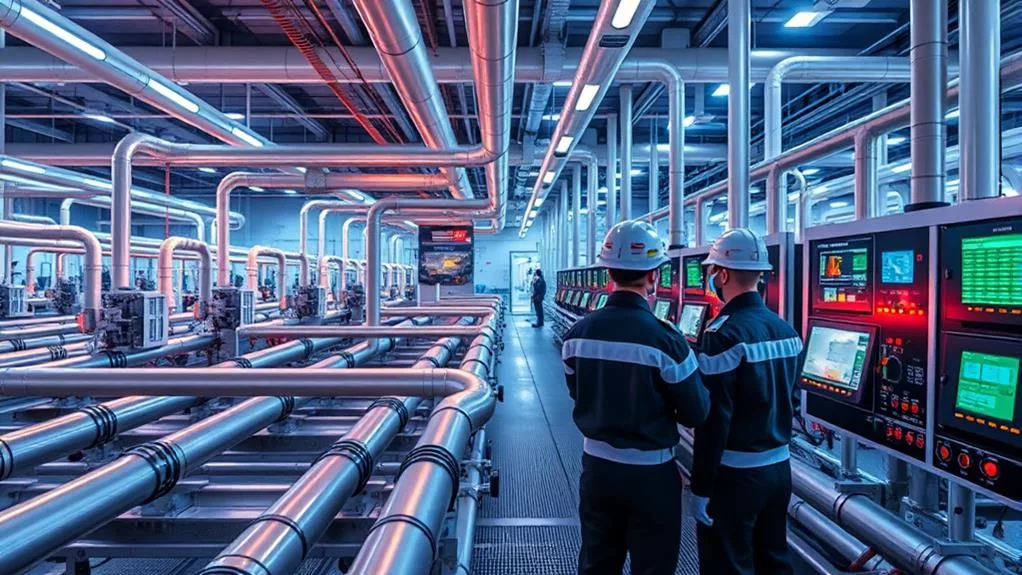
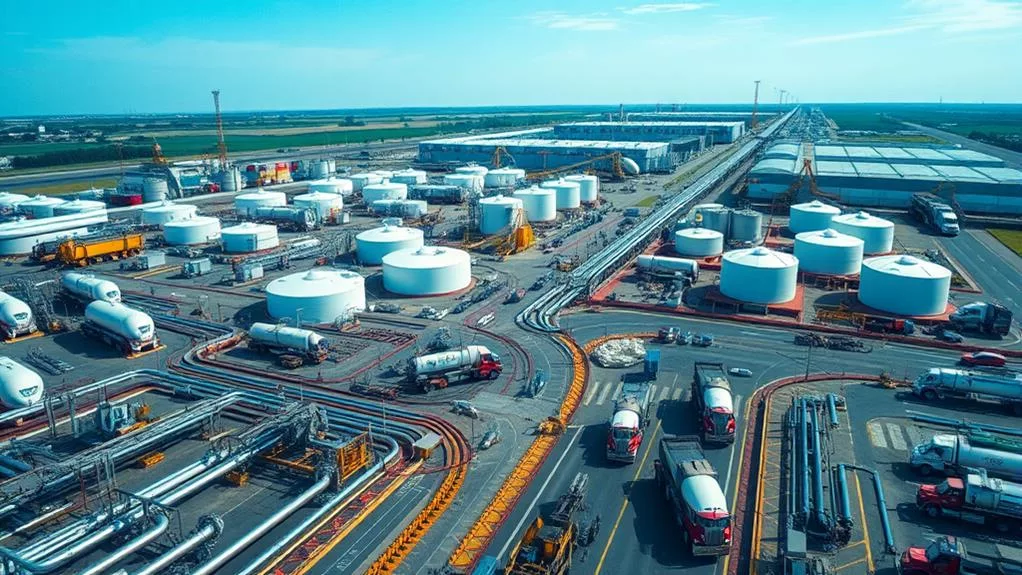
The movement and storage of fuel in distribution terminals are vital for efficient operations and uninterrupted supply chains. Terminal automation technologies, including automated loading arms and overfill prevention systems, enhance safety and precision. Accurate fuel distribution relies on precise flow measurement tools such as Coriolis and ultrasonic meters, which integrate with automation systems. Effective inventory management and control systems further optimise operations.
Advanced loading and unloading solutions, supported with detailed management services, ensure efficient fuel blending and unloading. Preventive maintenance and technical support services are crucial for maintaining terminal reliability. Examining these aspects will uncover the complexities involved in optimising terminal operations.
Terminal Automation Technologies
In terminal operations, Terminal Automation Technologies are crucial for enhancing efficiency and precision. These technologies play a significant role in managing fuel storage, ensuring optimal distribution processes, and ensuring compliance with industry standards. The Fuel Fact system represents this automation with comprehensive solutions that improve accuracy and streamline operations within fuel terminals. Integrating such systems allows operators to maintain precise control over inventory, preventing shortages or overages that could disrupt supply chains.
Automation also extends to the handling of tanker lorries. Loading and unloading processes are carefully managed to guarantee safety and efficiency. Advanced loading arms and pump solutions facilitate the seamless transfer of fuel, while on/off valves regulate flow, reducing the risk of spills. Automatic overfill prevention systems are critical for adhering to API 2350 regulations, thus protecting the environment from potential hazards.
To ensure best practices, operators might consider using the Endress+Hauser's Proservo NMS5 for precise level measurement or the FMC Technologies' Smith Meter PD Meter for accurate flow measurement. Such products enhance operational control, supporting the meticulous management required in modern terminal operations.
Precise Flow Measurement Tools
Precision in fuel distribution relies on accurate flow measurement tools such as Coriolis, turbine, and ultrasonic flow meters. In the oil and gas industry, these instruments are essential for ensuring seamless terminal operations, providing detailed measurements of fuel flow rates. This precision is necessary for efficient custody transfer, where exact quantities are crucial for billing accuracy. Advanced technology in these meters offers real-time data, allowing operators to monitor and control fuel movement with exceptional accuracy.
Integrating flow meters within terminal automation systems offers significant advantages, enhancing overall effectiveness and reducing the risk of errors in fuel measurement. This synergy streamlines operations and strengthens the accuracy of data vital for decision-making processes. In a competitive domain, being part of a community of industry professionals who prioritise precise measurement tools bolsters operational integrity.
Proper selection and calibration of these flow measurement tools are crucial for maintaining compliance with stringent industry standards and regulations. Adhering to these protocols ensures terminals align with best practices, reinforcing trust and reliability in the oil and gas sector. These measures underscore the industry's commitment to precision and accountability.
For instance, the Endress+Hauser Proline Promass E 200, a Coriolis flow meter, is renowned for its accuracy and reliability.
Similarly, the Siemens SITRANS FS230, an ultrasonic flow meter, is highly recommended for its advanced technology and precise measurements. These products exemplify the high standards required in the industry.
Inventory Control Systems
Efficient inventory management systems are vital in fuel distribution terminals, ensuring both operational efficiency and safety. These systems are crafted to optimise inventory through precise and reliable data. Accurate tank level measurement solutions are essential, providing clear insights into fuel quantities. This precision is necessary for daily operations as well as long-term planning and resource allocation.
Safety compliance forms the foundation of these systems, incorporating automatic overfill prevention mechanisms that meet stringent industry standards like API 2350. Preventing overfills safeguards terminal infrastructure and ensures the safety of personnel and the surrounding environment.
Flow meters, employing various technologies, guarantee accurate measurements of fuel movement, enhancing inventory accuracy. This level of precision is crucial for fiscal measurements and custody transfer systems, which are integral in optimising flow and maintaining robust inventory control.
Comprehensive terminal automation systems, such as the Fuel Fact system, facilitate efficient inventory management and distribution operations. Implementing such advanced systems enables fuel distribution terminals to foster a culture of safety and efficiency, achieving a harmonious balance between operational demands and regulatory compliance.
Consider products like the FuelsManager software for real-time inventory monitoring, or Emerson's Rosemount Tank Gauging System for precise tank level measurements. These solutions cater to the specific needs of the industry, ensuring both accuracy and reliability.
Advanced Loading and Unloading Solutions
Fuel distribution terminals require sophisticated loading and unloading solutions to ensure seamless operations. These systems are critical for enhancing efficiency and maintaining precise fuel blending, essential for catering to the evolving energy demands. Loading skids with biofuel blending and additive injection capabilities offer this exactness, enabling accurate and efficient mixing throughout the loading process. Incorporating cutting-edge technologies, these systems provide optimal performance and reliability, instilling confidence among terminal operators.
Custom-engineered unloading and product transfer skids further enhance terminal productivity, addressing specific operational needs. This bespoke approach maximises efficiency while aligning with the terminal's distinct requirements. Additionally, specialised aftermarket technical services, supported by skilled personnel, deliver essential maintenance and troubleshooting support, ensuring these advanced systems function smoothly and dependably.
On-site startup, commissioning, and operation training are vital components of these advanced solutions. They provide terminal staff with the necessary knowledge and skills for seamless implementation. This comprehensive approach not only bolsters operational efficiency but also fosters a collaborative environment, empowering and connecting all stakeholders.
Comprehensive Management Services
Drawing on decades of industry expertise, FM Energy provides comprehensive management services designed to enhance terminal operations within the oil sector. Our methodology focuses on operational improvements tailored to the specific needs of each terminal.
Through bespoke engineering and procurement services, FM Energy ensures our clients receive solutions that enhance performance, increasing efficiency and reliability throughout.
Our robust management services encompass the provision of skids and modular systems essential for efficient fuel loading in tanker trucks at distribution terminals. These systems are engineered for process streamlining, reducing downtime and maximising throughput.
With over 40 years of experience, FM Energy's consultation services guide clients in choosing the most appropriate terminal solutions, aligning strategic planning with current demands and future growth.
Moreover, our specialised aftermarket technical services cover on-site start-up, commissioning, and maintenance training. These services support terminal management teams as they tackle complex operational challenges.
FM Energy's emphasis on efficiency and performance improvement ensures our clients possess the knowledge and tools necessary for robust and efficient terminal operations, fostering a sense of community and shared success within the industry.
Maintenance and Support Strategies
A key element of FM Energy's operational success is its robust maintenance and support strategies, essential for ensuring smooth terminal operations. This commitment is evident in comprehensive on-site startup, commissioning, and maintenance training. Staff gain the necessary skills for optimal performance. FM Energy's preventive maintenance approach significantly reduces uncertainty, averting costly product losses and disruptions in fuel storage and distribution systems. These strategies build a sense of reliability and community, allowing clients to feel assured in their operations.
FM Energy augments its maintenance strategies with specialised aftermarket technical support services, offering clients ongoing assistance and troubleshooting techniques tailored to their specific needs. This proactive stance not only enhances efficiency but also optimises terminal operations, aligning with the company's dedication to performance improvement. Clients can easily access consultation services through FM Energy's website, facilitating bespoke maintenance solutions that address unique operational challenges.